Slopes & terrain
38.5 km groomed slopes · 44 slopes
6.2 km marked ski routes
- Classified pistes
- 38.5 km
- Local terrain
- 38.5 km
- Directly linked terrain
- 38.5 km
- Connectivity
- Single linked fell ski area
Lapland, Finland
Levi Ski Resort
38.5 km groomed slopes · 44 slopes
6.2 km marked ski routes
Levi is Finland’s best-developed ski destination, combining a compact resort centre with 44 slopes, 26 lifts and a modern network spread around the fell. Beginners and families are exceptionally well served by dedicated learning areas, Leevilandia and wide blue terrain, while red and black runs, parks, moguls and training slopes provide more challenge than Levi’s gentle reputation suggests. The 2026/27 season begins in early October using preserved snow and can extend into early May, giving Levi one of Europe’s longest and most dependable ski seasons. The resort centre is unusually complete for Lapland, with around 60 restaurants, extensive accommodation and immediate access to lifts and services. Beyond skiing, 230km of cross-country tracks, snowmobiling, husky and reindeer activities and regular northern-lights viewing make Levi particularly strong for mixed groups and non-skiers. The compromise is mountain scale: vertical and piste mileage remain modest compared with large Alpine resorts.

Exceptional
Very good
Good
Exceptional
Levi is an outstanding family destination, with ten children’s slopes, Leevilandia’s covered magic carpets, tubing, sledging and indoor play, plus children’s ski school and professional childcare providers. The spa, bowling, cinema and Lapland experiences such as huskies and reindeer give families exceptional variety, though facilities are spread between the centre and South Slopes.
Excellent
Levi has an excellent central ski village, with the Front Slopes and Zero Point placing lifts, ski school, rental and other services together in the resort centre. South, West and Northeast slope areas and wider accommodation districts are more spread out, so regular ski buses are useful for visitors exploring the whole mountain.
Exceptional
Levi has exceptional season-length reliability, helped by Arctic temperatures and snow farming. The 2026/27 ski season is scheduled to start on 2 October 2026 on preserved snow at the Front Slopes and run into early May 2027, with more terrain opening progressively as natural snow builds. That makes Levi unusually dependable at both ends of winter, but an October opening should not be confused with the full mountain being available.
Levi sits around the mid-to-high price range once Arctic travel and paid winter activities are included. Self-catering is practical because both K-Supermarket and S-Market operate in the centre, while two ski-bus routes connect the main slopes and major accommodation areas. Visitors can control food and local transport spending, but husky, reindeer, snowmobile and aurora excursions can quickly make the overall holiday expensive.
Levi has a distinctive event-led après scene rather than a continuous Alpine-style party strip. Panoramic Restaurant Tuikku currently presents itself as the 'Master of After Ski' every afternoon during the ski season, combining its summit setting with music and drinks, while central Levi picks up further during concerts, World Cup weekend and holiday periods. The scene can be lively, but its intensity varies much more by date than in St Anton or Ischgl.
Levi has exceptional non-ski depth and one of the most distinctive winter-activity mixes in the database. Current official tourism promotes husky and reindeer rides, snowmobile safaris, northern-lights trips, snowshoeing, extensive cross-country skiing and other guided Arctic experiences. These are major standalone reasons to visit rather than filler for a ski rest day, making Levi particularly strong for mixed groups and non-skiing partners.
Levi has very complete practical visitor infrastructure. The current ski school operates from the early season through spring, several rental centres provide alpine, touring and cross-country equipment, and Zero Point offers equipment storage. Two central supermarkets support self-catering, ski buses link the main sectors, and the village has a pharmacy and medical services. Childcare and family services add further depth, so most ski-week needs can be handled locally.
Levi is not a major freeride destination, but it has useful introductory ski-touring infrastructure. The resort publishes five marked touring routes that are intentionally placed outside avalanche terrain and close to the piste network, while local rental shops carry touring and freeride equipment and instruction is available. This is excellent for safe progression, but it is fundamentally different from the large uncontrolled off-piste terrain of major Alpine freeride resorts.
Levi’s nightlife is stronger than the old 'small but credible' description suggests. Hullu Poro Areena is currently described as the heart of Levi nightlife, holding up to 1,700 people across two floors with ten bars, a large dance floor, concerts and DJs. Wanha Hullu Poro adds another nightclub option, while central bars such as Hölmölä currently run to 02:00 on Fridays and Saturdays. The scene is real, though still most intense on weekends and event dates.
Levi has far more dining depth than the legacy copy suggests. Current official tourism lists more than 60 restaurants, ranging from Lapland and Arctic ingredients to pizza, Asian food, steakhouses and casual slope-side venues. King Crab House remains a current example built around Arctic seafood and northern flavours. The old '30+' estimate is therefore materially stale, and unverified legacy venue names should not be carried forward automatically.
Levi attracts a broad, fairly mature international mix. Families and couples are prominent because the destination works as a full Arctic holiday rather than only a ski trip, while World Cup weekends, concerts and nightlife bring a younger edge at selected times. The normal atmosphere is balanced and experience-led rather than dominated by either serious skiers or young party groups.
Levi has several distinct demand peaks rather than one simple busy month. The 2026 World Cup event runs 13–15 November, concentrating visitors around the early-season Front Slopes, while Christmas and December Lapland tourism and February school holidays create the main winter holiday pressure. January is quieter but very dark and cold; March usually offers a better balance of established snow cover, longer daylight and lower crowding outside event weeks.
For part of December and early January the sun does not rise above the horizon, yet most Levi slopes are illuminated from morning until closing. Twilight blues, pastel skies, floodlit snow and possible Northern Lights make midwinter feel fundamentally different from an Alpine ski day.
Levi's World Cup slalom winners traditionally receive a baby reindeer as part of the prize. The animal stays on a local farm, but champions name it — and repeat winners can build up quite a herd.
9.0/10transfer ease·Exceptional
Levi is exceptionally easy to reach through Kittilä Airport, only around 10–15 minutes from the resort. Airport buses and taxis align well with scheduled flights, and the broad winter flight programme makes the short final transfer a major practical advantage.
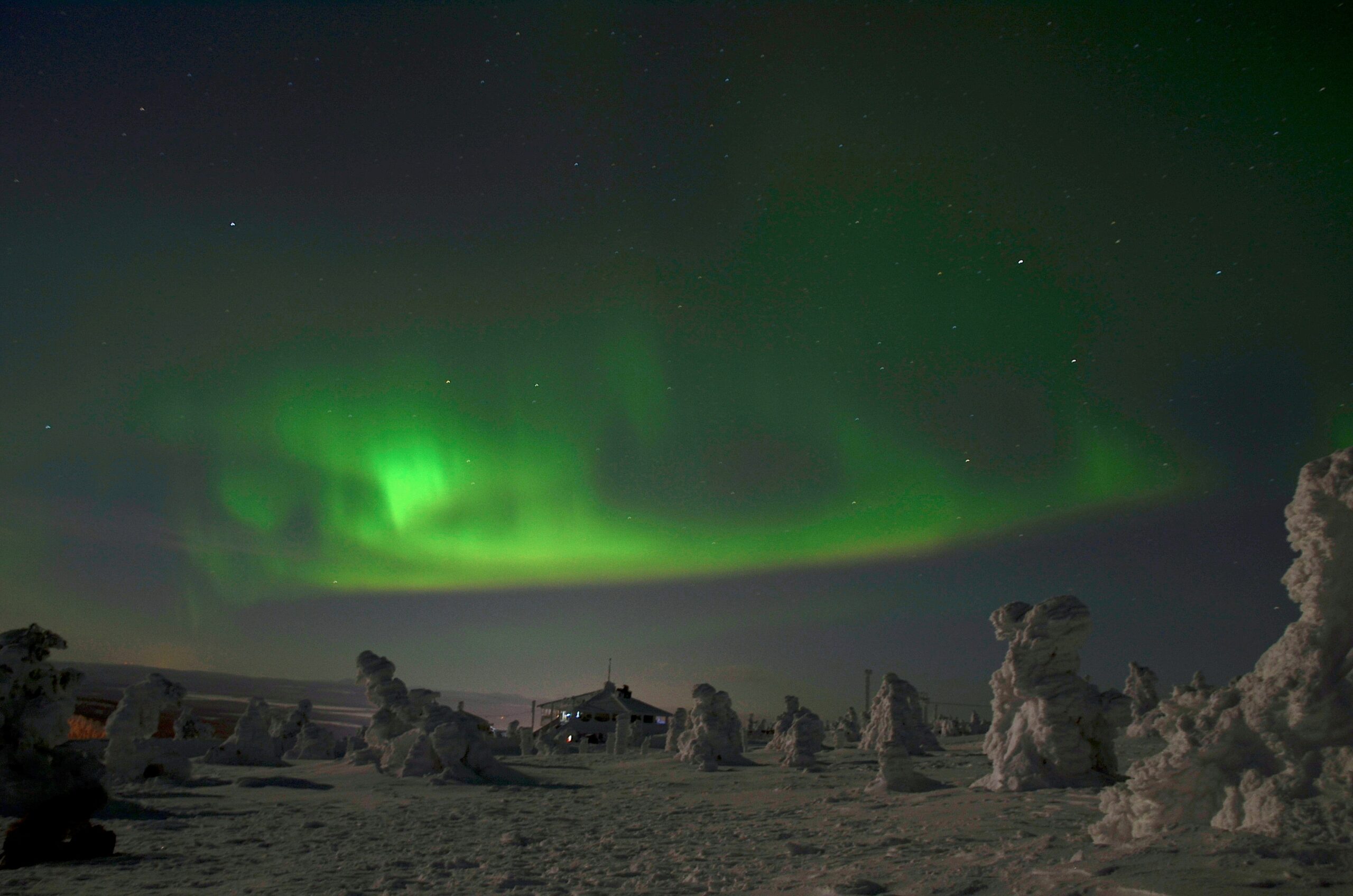
Levi's polar night normally runs from December into early January, when the sun does not rise above the horizon and natural daylight is limited to a few hours of twilight. Skiing still runs from morning to evening because the majority of Levi's slopes are illuminated. On clear days the snow and sky can move through deep blue and pastel colours, and on clear nights there is also a chance of seeing the Northern Lights from the fell.
Yes, but never as a guarantee. Levi publishes dedicated Aurora viewing locations and its wider destination statistics record frequent Northern Lights activity each year. Dark, clear nights from autumn through winter provide the best opportunity, while cloud is the main spoiler. The advantage of Levi is that aurora hunting can sit naturally alongside skiing, huskies, reindeer and other Arctic activities rather than requiring a separate trip.
Yes. The 2026/27 ski season is scheduled to begin on 2 October using preserved snow on the Front Slopes, with more terrain opening progressively as temperatures fall and winter snow develops. The season then continues into early May. An October opening is therefore real, but it should not be mistaken for the full mountain being open in autumn.
Levi currently has 44 slopes, 26 lifts and 38.5km of groomed pistes. That replaces the older 43km figure still present in some legacy ResortRival copy. The terrain is relatively compact compared with major Alpine domains, but the modern lift system, extensive lighting and family areas make the available mileage unusually usable through the dark Arctic winter.
It is one of Alpine skiing's strangest traditions. Winners of the World Cup slalom in Levi are awarded a baby reindeer, which remains cared for on a local farm rather than travelling home with the athlete. Multiple champions have accumulated and named their reindeer after repeated victories, making the prize a distinctive part of Levi's annual World Cup identity.
We use cookies to improve your experience and help keep ResortRival running smoothly.
You can accept all cookies or manage your preferences at any time.