Slopes & terrain
300 km directly linked Tignes–Val d'Isère
- Classified pistes
- 300.0 km
- Directly linked terrain
- 300.0 km
- Regional pass terrain
- 300.0 km
- Connectivity
- Single linked two-resort high-altitude domain
Savoie, Auvergne-Rhône-Alpes, France
Tignes–Val d’Isère
300 km directly linked Tignes–Val d'Isère
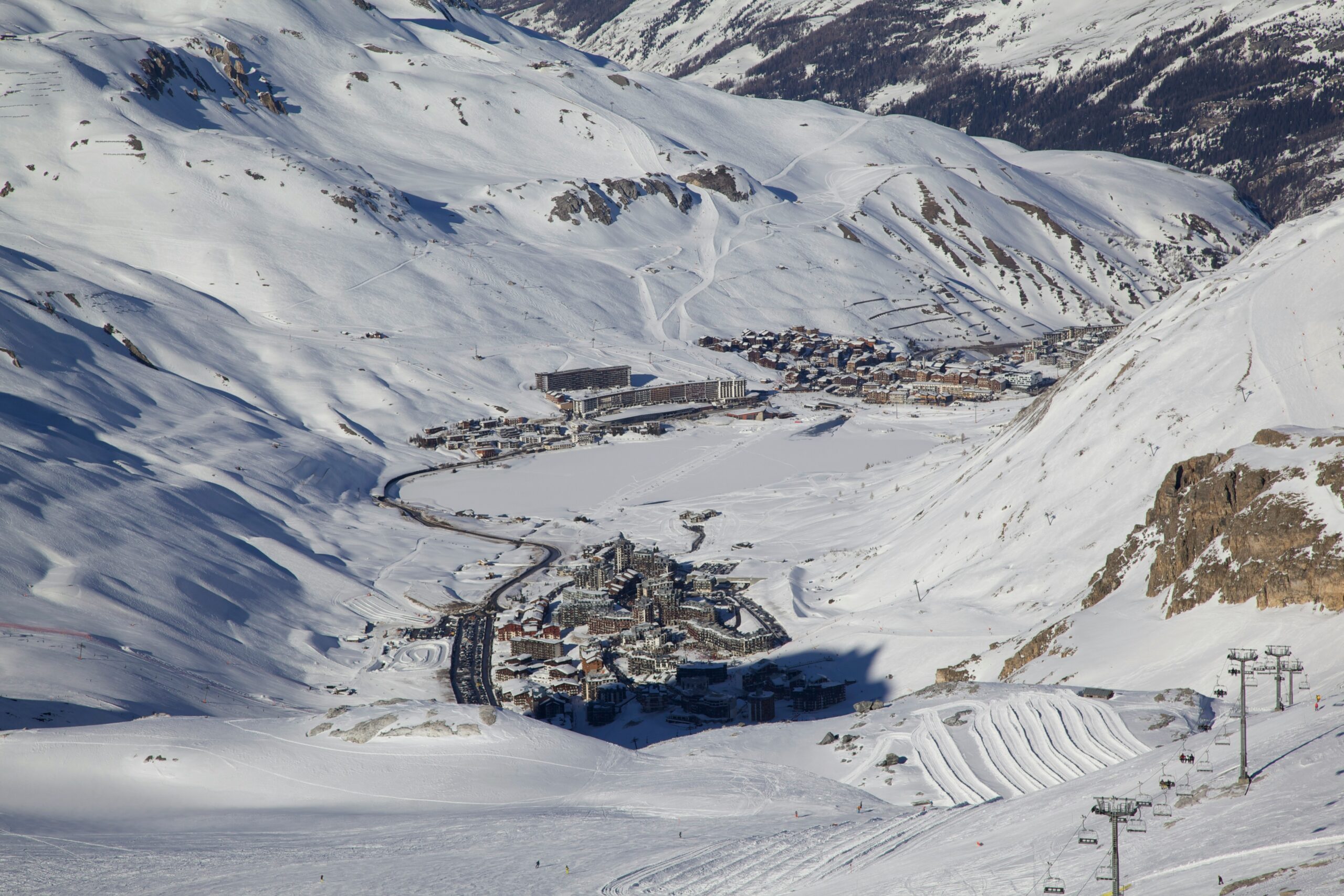
Tignes is a high-altitude French resort made up of five villages between 1,550m and 2,150m, with direct access to the 300km Tignes–Val d’Isère ski area. The linked domain reaches 3,456m and combines beginner zones, extensive intermediate mileage and demanding advanced and freeride terrain, making Tignes particularly strong for skiers who prioritise snow and mountain scale. Le Lac and Val Claret provide the liveliest high-altitude bases, while Les Brévières and Tignes 1800 offer more village character. Much of the resort is practical and ski-focused, with strong slope access and plenty of services, but it lacks the historic charm of traditional Alpine towns. For reliable snow, high-altitude terrain and easy access to serious skiing, Tignes is one of France’s strongest choices.

Exceptional
Exceptional
Exceptional
Exceptional
Tignes combines strong beginner terrain with family-focused accommodation, activities, childcare options, children’s camps and ski-school services across its high-altitude villages. It is particularly practical for families who prioritise snow reliability and easy slope access, although choosing the right village matters because facilities are spread across several separate bases.
Exceptional
Tignes is purpose-built around skiing, with lifts and snow fronts embedded in Val Claret and Tignes le Lac and free shuttles linking the main villages. Most high-altitude stays are very convenient, although Tignes 1800 and Les Brévières feel more separate from the 2100/Grande Motte side and village-to-village movement often uses transport.
Good
Tignes is one of Europe’s most snow-reliable major resorts. The 2026/27 season is scheduled from 21 November 2026 to 2 May 2027, with skiing reaching the Grande Motte glacier at 3,656m. The high base villages and long vertical give the resort dependable coverage from early winter into spring, even when lower French resorts are more vulnerable.
Tignes is mid-to-high priced for France, but it usually offers more cost flexibility than neighbouring Val d’Isère. Large apartment stock, self-catering and supermarkets across several villages make it easier to control food and accommodation spend, while lift passes and bars still keep the overall trip well above budget-resort territory.
Tignes has a lively, informal après scene spread mainly between Le Lac and Val Claret. Loop Bar runs large ski-in/ski-out sessions with live bands and DJs, while Le Palet adds music on the mountain and L’Arobaze Café blends après drinks with later DJ-led evenings. It suits groups who want atmosphere without the full intensity of Val Thorens.
Tignes has one of the stronger non-ski programmes among purpose-built resorts. Visitors can try ice diving, dog sledding, snowtubing, paragliding and a 3km sports toboggan run, while Le Lagon provides swimming, wellness and fitness and Tignespace adds climbing, trampolines and indoor sport. That gives mixed groups enough variety for full rest days.
Tignes has excellent practical visitor infrastructure across its different villages. Free shuttle buses link Le Lavachet, Le Lac, Val Claret, Tignes 1800 and Les Brévières; the resort has multiple supermarkets, pharmacies and a medical centre, while the official directory lists 10 snow-sports schools. Le Lagon and Tignespace add unusually strong indoor leisure and wellness facilities.
Tignes is a major freeride destination. The resort describes around 3,200 hectares of off-piste terrain across Tignes–Val d’Isère, with lift-accessed bowls, tree skiing lower down and well-known lines such as Chardo and Mickey’s Ears. The volume is substantial, but unsecured terrain still requires avalanche equipment, current risk checks and local guidance where appropriate.
Tignes has a genuine late-night scene rather than stopping after après. The resort maintains a nightclub directory, while current bars such as Inside Bar and L’Arobaze run themed nights, DJs, concerts and dancing into the evening. Val Claret is the strongest late-night hub, giving the resort enough depth for groups who want regular nights out during a ski week.
Tignes has strong dining depth for a purpose-built resort. The current official directory lists 57 restaurants, covering Savoyard food, international options, casual bars and higher-end dining. Ursus provides a serious fine-dining option, La Table de Jeanne covers classic Alpine dishes and Loop Bar sits at the social end of the spectrum. There is enough variety for a full week without repetition.
Tignes has a relatively young, active visitor profile, with season workers, groups of friends, freestyle and freeride skiers and international intermediates strongly represented. Families remain an important part of the mix, particularly in school-holiday periods and the quieter villages. Overall it feels sporty and youthful rather than luxury-led.
Tignes is busiest around Christmas/New Year and February school-holiday periods, when the main village lifts and key links toward Val d’Isère carry the most pressure. The 300km linked domain spreads skiers effectively once they move away from the bases. January and March usually give the best balance of strong snow, full-area access and lower congestion.
Tignes offers supervised ice diving and freediving under the frozen Lac de Tignes when conditions allow. It is a genuinely unusual winter activity rather than a generic resort add-on.
The 2026/27 calendar includes Mountain Shaker from 17–22 January 2027, with Big Air World Cup competition and concerts, followed by the Para Alpine Skiing World Championships from 7–19 March. These weeks can be a major green flag for sports fans and useful crowd context for everyone else.
6.0/10transfer ease·Good
Tignes is well served by transfer operators but remains a long journey from the main international gateways. Geneva and Lyon are around three hours by road, while trains finish at Bourg-Saint-Maurice roughly 30 km away before a coach or taxi final leg; direct airport coaches and private transfers make the route straightforward.
Val Claret and Tignes Le Lac are the main choices if you want the quickest access to lifts, restaurants and nightlife. Val Claret is especially convenient for the Grande Motte side and has the strongest late-night scene, while Le Lac feels slightly more central and balanced. Lavachet is quieter but still practical, and Tignes 1800 or Les Brévières suit visitors who prefer a lower, more village-like base.
Yes. Tignes and Val d’Isère form one directly linked ski area of around 300km, so skiers can move between the two resorts using lifts and pistes rather than road transport. The full link is scheduled to operate from late November in 2026/27, subject to snow and weather. As with any large linked area, check last-lift times before finishing the day on the opposite side.
Tignes is one of France’s strongest choices for early- and late-season skiing. The highest lift-served point reaches the Grande Motte glacier at 3,656m, and the 2026/27 winter is scheduled from 21 November to 2 May. The high villages and glacier access make spring skiing a genuine strength, although glacier operation and individual runs remain weather-dependent.
Yes, particularly for beginners travelling with stronger skiers. The resort has dedicated learning zones, ski schools and a large amount of blue progression terrain, while the linked area gives improving skiers somewhere to grow into. Tignes is large and spread across several villages, though, so first-time groups should choose accommodation close to their preferred nursery area rather than assuming every base is equally simple.
Yes. When ice conditions allow, qualified operators run supervised diving and freediving beneath the frozen Lac de Tignes, including sessions suitable for beginners. It is one of the resort’s most unusual non-ski activities and can be done by day or at night. Availability depends on the lake and operating conditions, so it is something to book and verify rather than assume will run every day.
We use cookies to improve your experience and help keep ResortRival running smoothly.
You can accept all cookies or manage your preferences at any time.