Slopes & terrain
425 km linked · 225 km local
- Classified pistes
- 425.0 km
- Local terrain
- 225.0 km
- Directly linked terrain
- 425.0 km
- Regional pass terrain
- 425.0 km
- Connectivity
- Linked mega-domain
Savoie, Auvergne-Rhône-Alpes, France
Paradiski
425 km linked · 225 km local
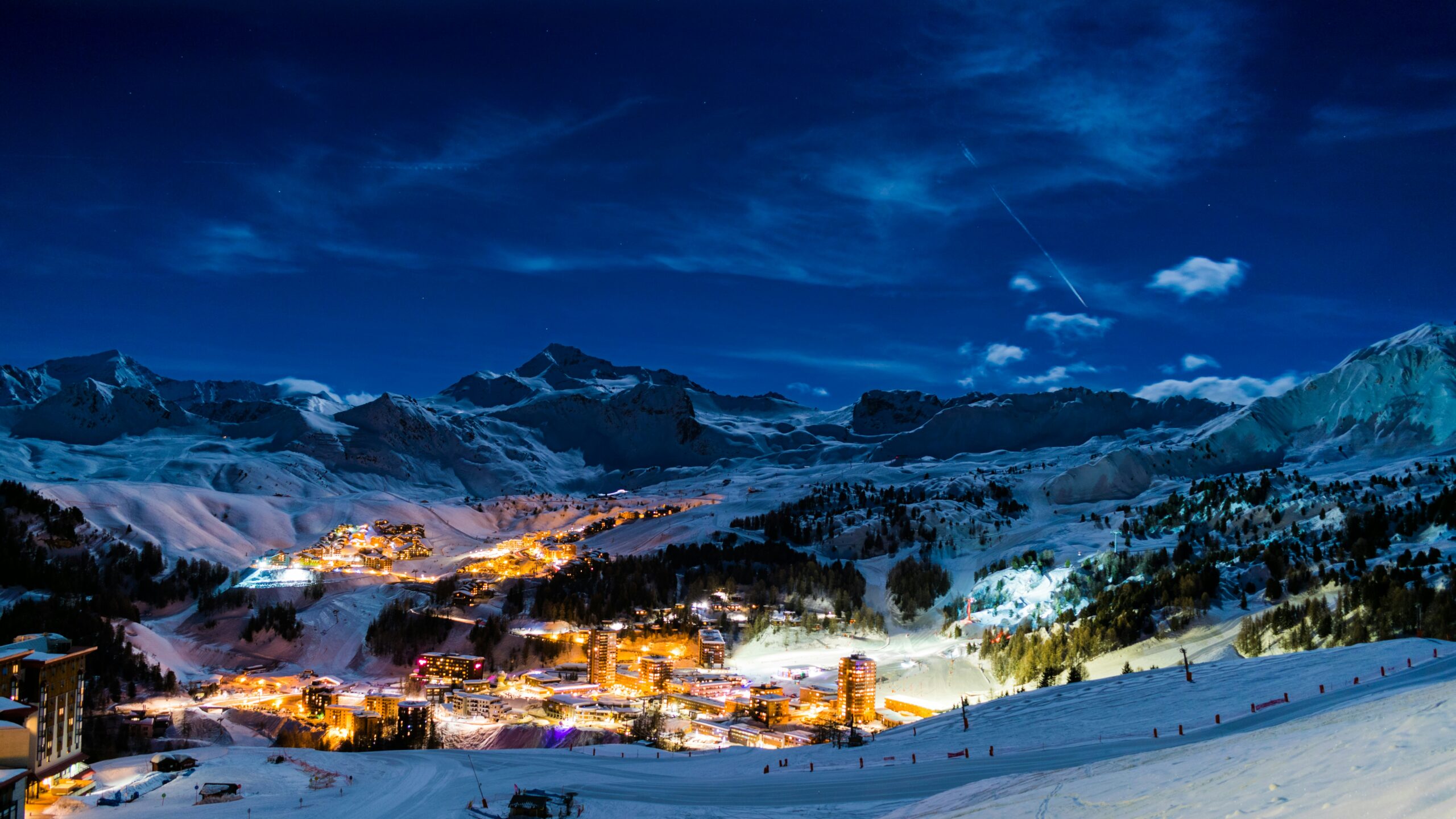
La Plagne is a vast French ski destination made up of 11 villages, from traditional valley bases to purpose-built high-altitude stations above 2,000m. Its own ski area offers 225km of pistes, including an unusually large 78 blue runs, while the Vanoise Express links into Les Arcs and Peisey-Vallandry to create the 425km Paradiski domain. That combination makes La Plagne exceptionally strong for beginners, families and intermediates, although 52 local red and black pistes give stronger skiers more depth than its gentle reputation suggests. High-altitude terrain and 70% of Paradiski above 2,000m support strong snow reliability. Convenience varies significantly by village: Plagne Centre, Belle Plagne and other altitude bases offer excellent slope access, while lower traditional villages feel more atmospheric but add lift or transport time. The overall character is practical and family-focused rather than uniformly picturesque.

Exceptional
Exceptional
Excellent
Exceptional
La Plagne has deep family infrastructure across its villages, including professional childcare from infancy in selected bases, children’s clubs, ski schools, snow gardens and protected Cool Ski learner zones. The ski area gives families excellent long-term progression, but services vary between villages, so choosing the right base is important for keeping daily logistics simple.
Exceptional
La Plagne’s altitude villages are exceptionally ski-focused, with large snow fronts and extensive ski-in/ski-out accommodation in bases such as Plagne Centre and Plagne Villages. Free shuttles and teleport links support off-snow movement, but the many separate villages are far apart by road, so convenience is excellent within a chosen base rather than across the entire destination.
Excellent
La Plagne is one of France’s more snow-reliable large resorts because its terrain climbs from roughly 1,250m to 3,080m. The high-altitude area is scheduled from 12 December 2026 to 24 April 2027, with several lower village sectors planned through 17 April. That altitude provides strong core-season and spring coverage, although the lowest village returns remain more exposed in mild weather.
La Plagne offers unusually broad cost flexibility for a major French linked resort. Its eleven villages contain a very large stock of apartments, chalets and residences, making self-catering practical, while free inter-village shuttles reduce the need for a car once in resort. Prices vary sharply by village and holiday week, so La Plagne is better described as flexible mid-range than uniformly cheap.
La Plagne’s après scene is livelier than its family reputation suggests, especially around Plagne Bellecôte. Le Bonnet runs DJ-led after-ski sessions at the foot of the slopes, while La Grotte du Yéti moves from après into a party-bar format that can continue until 02:00. Other villages offer quieter terraces and pubs, so visitors can choose between social drinks and a much more energetic finish to the ski day.
La Plagne has exceptional non-ski depth. Its Olympic bobsleigh track is unique for public experiences in France, while visitors can also try snowshoeing, dog sledding, ice climbing, sledging and winter walking. Pools, cinemas and other indoor facilities open across several villages during winter, giving families and mixed groups meaningful full-day alternatives in bad weather.
La Plagne has extensive practical infrastructure spread across its eleven villages. Several major ski schools teach children from around age three, equipment-rental shops operate throughout the altitude resorts, and the current childcare directory lists numerous winter crèches and clubs, including care from five months in Montchavin–Les Coches. Free inter-village shuttles and late pedestrian lift links make it realistic to manage a ski week without driving between the main high-altitude bases.
La Plagne has serious high-alpine off-piste terrain rather than merely generic Paradiski freeride access. The North Face of Bellecôte starts above 3,000m and is explicitly reserved for very strong skiers, while seven marked ski-touring routes provide a safer introduction before progressing into guide-led free touring. True off-piste requires avalanche awareness, appropriate equipment and professional guidance.
La Plagne has more genuine nightlife than the old “bars rather than clubs” description suggests. La Cave in Plagne Bellecôte is explicitly listed as a disco, Luna Bar in Plagne Centre runs until 02:00 with regular DJs and live music, and La Grotte du Yéti also continues as a late party bar. Nightlife is dispersed between villages, but visitors who choose Bellecôte or Centre have real late-night options.
Dining in La Plagne is spread across its villages and ranges from traditional Savoyard mountain food to casual slope-side and more polished hotel restaurants. Le Forperet remains a current traditional mountain-restaurant listing at Montalbert, while Le Bonnet provides a contemporary casual option in Bellecôte and the wider resort directory covers extensive village and altitude dining. The range is strong enough for a week, but the legacy “50+ restaurants” figure is better avoided without a current official total.
La Plagne has a broad family-led profile, with parents, children and intermediate groups especially visible across its ski-in/ski-out villages. Plagne Bellecôte and Plagne Centre add a younger social element through busier bars and late venues, so the resort feels more mixed than its family reputation alone suggests. Overall it is balanced rather than youth- or luxury-dominated.
La Plagne is busiest around Christmas/New Year and during February school holidays, when family teaching zones, village access lifts and the major Paradiski links are under the most pressure. Its eleven-village layout and large linked ski domain spread skiers well once they move away from the main bases. January, early February outside school holidays and mid-March usually give a better balance of full operations and space.
La Plagne’s 1,500m track was built for the 1992 Winter Olympics and is still open to the public. Depending on the experience, ordinary visitors can descend at roughly 80, 90 or even 120km/h on the same banked ice used by competition sleds.
A holiday in Belle Plagne feels very different from Plagne Centre, Aime 2000, Montchavin or Champagny. Altitude, architecture, nightlife, family convenience and traditional-village character vary enough that choosing the wrong base can materially change the trip.
8.0/10transfer ease·Excellent
La Plagne has several practical arrival options despite the typical Tarentaise transfer time. Major airports connect by scheduled ski shuttles and private transfers, while rail to Aime-la-Plagne provides a relatively short final taxi or bus leg; peak-weekend traffic can materially lengthen the mountain journey.
There is no single La Plagne centre: the resort has 11 villages with very different personalities. Plagne Centre is the practical ski hub, Belle Plagne is high, car-free and attractive for ski-in/ski-out stays, Bellecôte is convenient for moving around the ski area, Aime 2000 is the highest and architecturally distinctive, while lower villages such as Montchavin-Les Coches and Champagny offer more traditional atmosphere. Choosing the village is almost as important as choosing La Plagne itself.
La Plagne has about 225km of local pistes. The Vanoise Express then links it directly to Les Arcs–Peisey-Vallandry, creating the 425km Paradiski domain without a road transfer. That makes the 425km figure a genuine linked-area comparison rather than a regional-pass marketing total.
Yes — it is one of its strongest markets. The resort has extensive blue and green terrain, multiple ski schools, family-oriented villages and a large accommodation stock close to the pistes. Stronger skiers still have high-alpine terrain and access into Paradiski, so families with different abilities are less likely to outgrow the resort during a week.
Yes. The public uses the same 1,500m, 19-turn track built for the 1992 Albertville Winter Olympics. Options range from the self-guided Bob Raft at up to about 80km/h to solo Speed Luge around 90km/h and Bob Racing with a professional pilot at up to roughly 120km/h. It is one of the rare ski-resort attractions where ordinary visitors can experience a real Olympic sliding track.
La Plagne reaches above 3,000m and the high-altitude area is scheduled from 12 December 2026 to 24 April 2027. That gives it strong core-season and spring reliability, although lower villages and valley-facing returns are more exposed during warm periods. The bobsleigh track itself is scheduled from 12 December into late March.
We use cookies to improve your experience and help keep ResortRival running smoothly.
You can accept all cookies or manage your preferences at any time.