Cortina d'Ampezzo

Veneto, Italy

Cortina Ski Area / Dolomiti Superski

Overall rating ResortRival's editorial overall resort score on a 1–10 scale. 8.5/10

At a glance

Quick resort stats

Altitude 1,224 m
Ski area 120 km Cortina Skiworld aggregate · linked-sector km pending Two principal ski areas + wider satellite areas
6 day ski pass €423 2026/27
Snow reliability 7.0/10 Very good
Affordability 3.0/10 Limited
Après 5.0/10 Fair
Other activities 8.0/10 Excellent
Resort amenities 8.0/10 Excellent

Slopes & terrain

8.0/10 · Excellent

120 km Cortina Skiworld aggregate · linked-sector km pending

Blue45.0 km (37.5%)
Red59.0 km (49.2%)
Black16.0 km (13.3%)
Classified pistes
120.0 km
Local terrain
120.0 km
Regional pass terrain
1,200.0 km
Connectivity
Two principal ski areas + wider satellite areas

Resort overview

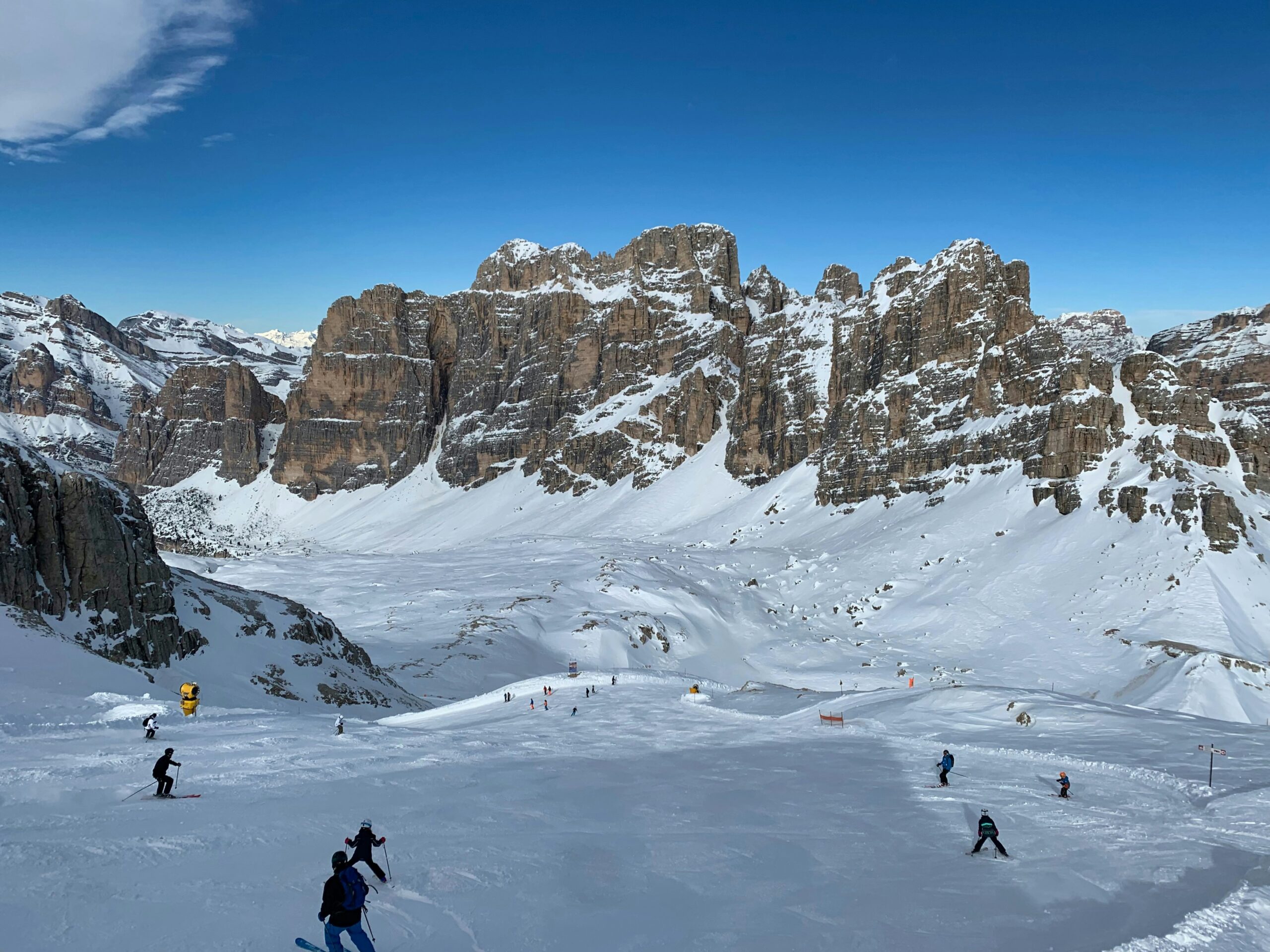
Cortina d’Ampezzo is a historic Dolomites town combining world-famous scenery, Olympic ski heritage and a polished Italian resort atmosphere. The Cortina valley pass covers 120km of slopes across Cortina and nearby areas, with the main skiing split between Tofana, Faloria-Cristallo and the Cinque Torri-Lagazuoi sector. Tofana offers the broadest mix, including strong blue and red terrain and demanding World Cup pistes, while Faloria-Cristallo adds technical skiing and reliable late-season conditions. The Skyline cable car has improved links between Tofana and Cinque Torri, but Faloria remains a separate sector reached from town, so the ski experience is less seamless than in fully linked resorts. Cortina is strongest for intermediates and confident piste skiers who value scenery, food and town atmosphere as much as doorstep convenience.

Who is Cortina d'Ampezzo best for?

ResortRival editorial scores use a 1–10 scale to show how strongly the resort performs for each factor.

Skier ability

Beginner

7.0/10

Very good

Intermediate

8.0/10

Excellent

Advanced

9.0/10

Exceptional

Practical fit

Family suitability

8.0/10

Excellent

Cortina offers a broad family week, with child-focused ski lessons, beginner terrain around Socrepes, family-friendly hotels and restaurants, plus skating, curling, snowshoeing and indoor activities. Some ski schools can help with hotel-to-slope transport, but the ski sectors are dispersed and nursery-style childcare is less developed than in the strongest family-specific resorts.

Resort convenience

6.0/10

Good

Cortina has convenient access to Faloria from the town centre, but its overall ski area is spread between Faloria, Tofana, 5 Torri and Lagazuoi. Ski buses connect the different gateways and Cortina Skyline improves links on the western side, yet visitors who want to ski the full destination should expect regular road transport between sectors.

Transfer ease

8.0/10

Excellent

Resort guide

Snow reliability

7.0/10 · Very good

Cortina’s prepared-piste reliability is strong in core winter thanks to altitude and extensive snowmaking, although it cannot match the natural snow security of the highest glacier resorts. Higher sectors such as Faloria, Cristallo and the upper Tofana terrain hold conditions best, while lower and sunnier slopes are more exposed during prolonged mild spells.

Affordability

3.0/10 · Limited

Cortina is a premium Italian resort, especially for central hotels, dining and shopping around Corso Italia. Apartments and supermarkets provide some cost control, but the destination is not value-led and prices rise sharply around major events. It generally remains less extreme than top Swiss luxury resorts, while still charging for its scenery, heritage and town-based lifestyle.

Après

5.0/10 · Fair

Cortina’s après is more aperitivo-led than beer-hall style. Janbo runs a dedicated winter après event alongside DJ sets and live music, while Molo Pub provides a casual town option from happy hour into the evening. The overall scene is stylish and sociable, suiting visitors who want drinks and music after skiing without a full resort-wide party culture.

Other activities

8.0/10 · Excellent

Cortina has exceptional non-ski depth. The historic Olympic Ice Stadium offers skating and curling, while the valley also supports snowshoeing, cross-country skiing, Nordic walking, wellness, guided mountain experiences and shopping. That mix of sport, culture and town-based activity makes Cortina one of the strongest options for mixed groups and non-skiers in Italy.

Resort amenities

8.0/10 · Excellent

Cortina has deep practical visitor infrastructure for a mountain town. The official guide lists numerous ski and snowboard schools, mountain guides and specialist instructors, while the rental directory contains multiple shops with equipment servicing and ski storage. The town itself adds broad retail, restaurants, bars and everyday services, making it much more self-contained than a small purpose-built ski station.

Off-piste

7.0/10 · Very good

Cortina has serious freeride potential across Cristallo, Tofane, Faloria, Cinque Torri and Lagazuoi. The official destination highlights routes such as Sci Club 18, Val Orita and Bus de Tofana, and guided heliskiing is also available. The terrain is complex and condition-dependent, so local guides, avalanche equipment and current snow information are appropriate outside secured pistes.

Nightlife

Cortina’s nightlife is stylish and town-based rather than club-heavy. Janbo combines aperitifs, themed nights, DJs and live music, while Molo Pub stays open from happy hour until late with live-music evenings. The current official bar directory also includes cocktail bars, pubs and wine venues, giving visitors solid evening variety without an all-night party-resort feel.

Restaurants & bars

Cortina’s food scene is one of its biggest strengths. The official destination directory spans traditional Ampezzo cooking, mountain huts, gourmet restaurants, pubs, wine bars and international options throughout town. Visitors can combine serious destination dining with casual aperitivo and mountain lunches, making food a meaningful reason to choose Cortina rather than simply an amenity around the skiing.

Average age

36

Cortina attracts a relatively mature and style-conscious crowd, with couples, affluent travellers, families and experienced ski groups strongly represented. Major sporting events bring a broader and younger mix, but on a normal ski week the town feels more adult and polished than youth-led party resorts. The overall profile is social, Italian and lifestyle-oriented rather than quiet.

Crowds & peak periods

Cortina is busiest during February school-holiday periods and around major sporting or event weeks, when the town, road network and individual ski-sector access points can become noticeably busier. Because the local ski areas are spread across several sectors, pressure is uneven rather than concentrated in one lift hub. Mid-January and March usually offer a calmer experience with strong core-season skiing.

What makes this resort different?

What makes it different

A two-generation Olympic ski town

Cortina hosted Italy’s first Winter Olympics in 1956 and returned to the Olympic stage in 2026, with women’s alpine skiing on the Tofane plus curling and sliding sports in town. Few ski destinations have Olympic history this physically embedded in the normal resort experience.

Worth knowing

Olympia delle Tofane is back for ordinary skiers

The famous women’s Olympic and World Cup piste returns to public skiing for 2026/27, but race preparation can affect access. The next Women’s World Cup weekend is scheduled for 15–17 January 2027.

Getting there

8.0/10transfer easeExcellent

Cortina has good access by Dolomites standards, with Venice as the main international gateway and direct coach services taking around two hours in favourable conditions. Treviso is another useful airport, while rail passengers normally continue by bus from Calalzo or Dobbiaco because trains do not enter Cortina itself.

Main airport
Venice Marco Polo Airport
Typical transfer
162 km; current direct airport coach timetable is about 2h10 from Venice Airport to Cortina. Treviso is 130 km away.
Public transport
Good but not rail-direct: Calalzo di Cadore station is 35 km away and Dobbiaco 31 km, both linked onward by bus. Daily long-distance coaches also connect Venice/Mestre.
Other airports
Treviso (130 km) and Innsbruck (170 km) are credible alternatives; Verona is farther at 260 km.
Transfer options & cost
Daily Cortina Express/ATVO/FlixBus links give a practical lower-cost route from Venice Airport and Mestre; taxis/private transfers are also widely available.
Final mile
Coaches arrive at the Ice Stadium in Cortina, with no forced external resort transfer. Mountain-road weather/traffic remains the main final-leg risk.

Frequently asked questions

Is Cortina one connected ski area or several separate ski areas?

Cortina’s 120km headline covers several sectors rather than one seamless lift-linked mountain. Tofana/Pocol links toward Cinque Torri and Lagazuoi on the western side, while Faloria–Cristallo sits separately to the east and is reached from town or by ski bus/road. That gives the week excellent variety, but skiers who want to roam the full local mileage without changing sector should not treat Cortina like the 3 Vallées.

Is Cortina good for intermediate and advanced skiers?

Yes. Intermediates get scenic red cruising across multiple Dolomite sectors, while stronger skiers have demanding pistes in Tofana, Faloria and the World Cup terrain around Olympia delle Tofane. Beginners also have good learning zones around Socrepes and lower sectors. Cortina’s strength is the mix of skiing, scenery and town life rather than sheer seamless mileage.

Can normal skiers ski the Olympic and World Cup pistes in Cortina?

Yes, when they are open to the public. Olympia delle Tofane is Cortina’s iconic women’s race piste and hosted Olympic alpine events in 2026. The 2026/27 resort information confirms it returns to public skiing, although race preparation for the Women’s World Cup can temporarily restrict parts of the course. Check live piste status if skiing it is a priority.

What did Cortina host at the 2026 Winter Olympics?

Cortina hosted women’s alpine skiing on the Tofane, curling in the historic Olympic stadium and bobsleigh, skeleton and luge at the sliding centre. That followed its first Winter Olympics in 1956, making Cortina one of the rare ski towns with two generations of Olympic history built directly into the resort. The 2026 improvements now form part of the normal visitor infrastructure.

Is Cortina good for non-skiers and mixed groups?

Very much so. Cortina is a real Italian mountain town rather than a piste-only station, with Corso Italia shopping, cafés, restaurants, winter walking, skating, curling, spas and major sporting heritage. Because the ski sectors are already spread around the valley, mixed groups can build a full holiday around the town without feeling that every day has to revolve around downhill skiing.

Scroll to Top