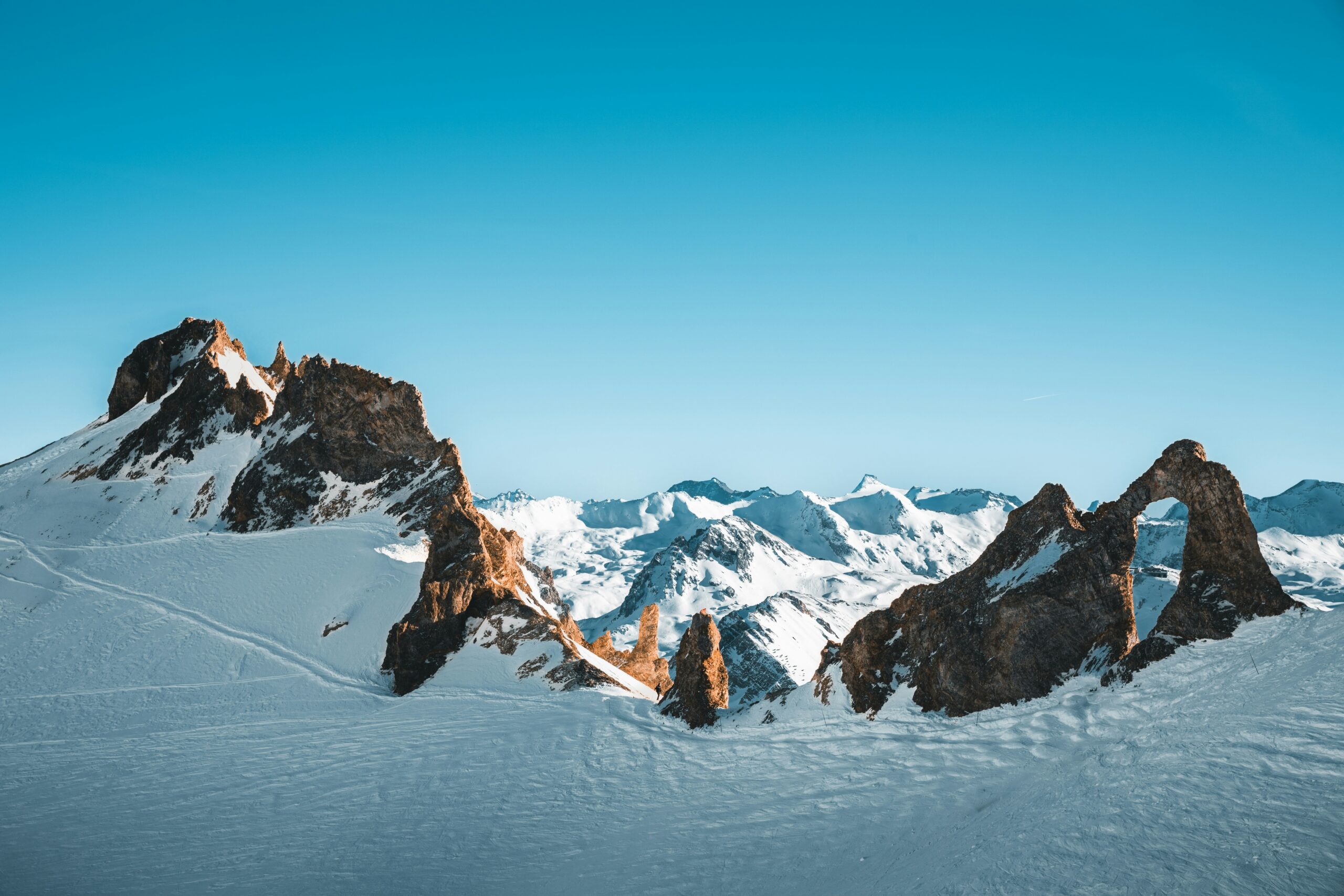
Slopes & terrain
300 km directly linked Tignes–Val d'Isère
- Classified pistes
- 300.0 km
- Directly linked terrain
- 300.0 km
- Regional pass terrain
- 300.0 km
- Connectivity
- Single linked two-resort high-altitude domain
Savoie, Auvergne-Rhône-Alpes, France
Tignes–Val d’Isère
300 km directly linked Tignes–Val d'Isère
Val d’Isère is a high-altitude French resort at 1,850m, linked directly with Tignes to form a 300km ski area stretching from 1,550m to above 3,400m. The domain has genuine depth across ability levels, with accessible beginner sectors, extensive blue and red mileage, famous advanced pistes and serious off-piste possibilities. Its altitude and high mountain terrain make snow reliability a major strength. The village is more atmospheric than many purpose-built French resorts, combining traditional Savoyard character with premium hotels, strong restaurants, busy bars and one of the Alps’ livelier après scenes. Prices are high and peak weeks can be busy, but skiers wanting reliable snow, varied terrain and a full-service resort experience will find very few weaknesses.

Excellent
Exceptional
Exceptional
Exceptional
Val d’Isère is exceptionally well equipped for families, with protected beginner areas, free learner lifts, multiple ski schools, nursery and childcare services, family fun zones and a wide choice of non-ski activities. The main village keeps many essentials close together, making it a strong choice for families who want serious skiing without sacrificing practical support.
Excellent
Val d’Isère’s main village has an excellent ski setup, with the Solaise and Olympique gateways, learner lifts and ski-back pistes concentrated around the central snow front. Outlying neighbourhoods such as La Daille, Le Fornet and Le Laisinant rely more on the excellent free shuttle network, so a central stay is noticeably more convenient than a peripheral one.
Good
Val d’Isère is one of France’s most snow-reliable major resorts. The ski area reaches above 3,400m, the 2026/27 winter is scheduled from 28 November to 2 May, and more than 65km of pistes are covered by snowmaking. Predominantly north-facing slopes and the high-altitude terrain help preserve coverage deep into spring.
Val d’Isère sits firmly in the premium French-resort bracket. Central accommodation, restaurants and lift access are expensive, although apartments, self-catering and village shops give visitors some scope to control everyday spending. The value case comes from the 300km linked ski area, long season and strong resort infrastructure rather than from budget pricing.
Val d’Isère has one of France’s strongest après scenes. La Folie Douce provides cabaret-style shows and DJs on the mountain, while Cocorico starts live music and DJ-led terrace sessions from late afternoon. Les Tontons and the Petit Danois add further options in the village, so après has genuine depth rather than relying on one headline venue.
Val d’Isère has enough non-ski activity for full rest days. Options include the village ice rink, paragliding from Solaise, snowshoe and winter-walking routes, sledging, e-buggies and other snow activities, plus the 5,000m² Aquasportif centre with pool, wellness, climbing and indoor sport. That makes it particularly strong for mixed groups.
Val d’Isère has very strong practical visitor infrastructure. Free shuttle buses connect the village neighbourhoods and snow fronts, while the centre has pharmacies, medical services, shops, equipment rental and free Wi‑Fi points. Childcare and babysitting are available for families, and the compact centre means most everyday services can be reached without a car.
Val d’Isère is a top-tier freeride destination with a huge amount of lift-accessed terrain. Well-known off-piste sectors include the Vallon de l’Iseran, Gorges du Malpasset and Vallée Perdue, and the resort describes more than 10,000 hectares of untouched-snow terrain. Much of it is unsecured, so guides, avalanche equipment and current risk information are essential.
Val d’Isère stays lively well after après ends. Doudoune Club is the main nightclub and runs until the early morning, while Le Petit Danois, Les Tontons, Poya and IMA add further dancing and late-bar options. The result is a genuinely deep nightlife scene: energetic and international, but more polished than the deliberately rowdy atmosphere of St Anton.
Val d’Isère has a broad and polished food scene rather than just party-resort dining. Blizzard provides refined French and Savoyard cooking in the village, Les Tontons combines slope-side food with a lively La Daille setting, and La Folie Douce adds multiple mountain concepts. Visitors can comfortably mix traditional Alpine food, casual lunches and more refined evenings over a week.
Val d’Isère has a relatively young but broad international crowd, with experienced ski groups, season workers and visitors in their late 20s and 30s strongly represented. Families become much more visible in school-holiday weeks. The resort feels more mature and polished than a university-led party base, but noticeably younger than luxury-first resorts such as Courchevel.
Val d’Isère is busiest around Christmas/New Year and February school-holiday weeks, when central lifts, the snow fronts and key links toward Tignes carry the most pressure. The 300km domain disperses people well once skiers spread out. January, early February before holidays and mid-March usually provide the best balance of strong snow and lower congestion.
Val d’Isère’s Face de Bellevarde and Critérium de la Première Neige give the resort unusually visible elite-skiing heritage. In 2026 the men’s World Cup weekend is scheduled for 12–13 December.
The 2026/27 winter is scheduled through 2 May, supported by a high village and terrain above 3,400m. That makes Val d’Isère one of the stronger choices for an April ski trip.
6.0/10transfer ease·Good
Val d’Isère has plenty of transfer choice, but the main international airports are not especially close. Geneva and Lyon are around three hours by road, while rail to Bourg-Saint-Maurice followed by a 30–40 minute bus is a useful alternative; shared airport coaches also operate, particularly for peak ski travel.
Yes, although its reputation is much stronger among experienced skiers. Val d’Isère has dedicated learning terrain, renowned ski schools and gentle areas around the snow fronts and higher sectors. Importantly, beginners can use lifts such as Solaise and Olympique to download rather than being forced onto a difficult home run. It is an expensive place to learn, but the progression potential is excellent.
The linked Tignes–Val d’Isère domain has around 300km of slopes, and skiers can move between the two sides using the lift-and-piste network. Terrain runs from about 1,550m to above 3,400m, so a full-area pass gives enough variety for a week without relying on buses between separate ski resorts.
Val d’Isère is one of the more dependable major French resorts because of its 1,850m village, high-altitude terrain and access above 3,400m. For 2026/27 the resort is scheduled to operate from 28 November to 2 May. Spring conditions naturally change through the day, but the altitude makes late-season skiing a genuine strength rather than a token closing-week offer.
Val d’Isère has one of France’s strongest après scenes. La Folie Douce and Cocorico create the headline mountain and terrace parties, while the village continues with bars and clubs later into the night. It is lively enough for dedicated party groups but still broad enough that families and visitors who are not interested in après can avoid making it the centre of their holiday.
The Critérium de la Première Neige is Val d’Isère’s long-running Alpine Ski World Cup event, normally held in December. The men’s races are scheduled for 12–13 December in 2026. It brings elite racing, spectators and extra atmosphere to the resort, so it is a brilliant week for ski-racing fans but worth knowing about if you prefer a quieter early-season visit.
We use cookies to improve your experience and help keep ResortRival running smoothly.
You can accept all cookies or manage your preferences at any time.