Garmisch-Partenkirchen

Bavaria, Germany

Garmisch Classic / Zugspitze

Overall rating ResortRival's editorial overall resort score on a 1–10 scale. 7.8/10

At a glance

Quick resort stats

Altitude 708 m
Ski area 60 km across two separate areas · 40 km Garmisch-Classic Two separate destination ski areas
6 day ski pass €378 2026/27
Snow reliability 7.0/10 Very good
Affordability 5.0/10 Fair
Après 5.0/10 Fair
Other activities 8.0/10 Excellent
Resort amenities 8.0/10 Excellent

Slopes & terrain

7.0/10 · Very good

60 km across two separate areas · 40 km Garmisch-Classic

Blue16.0 km (28.1%)
Red31.0 km (54.4%)
Black10.0 km (17.5%)
Classified pistes
57.0 km
Local terrain
60.0 km
Directly linked terrain
40.0 km
Connectivity
Two separate destination ski areas

Resort overview

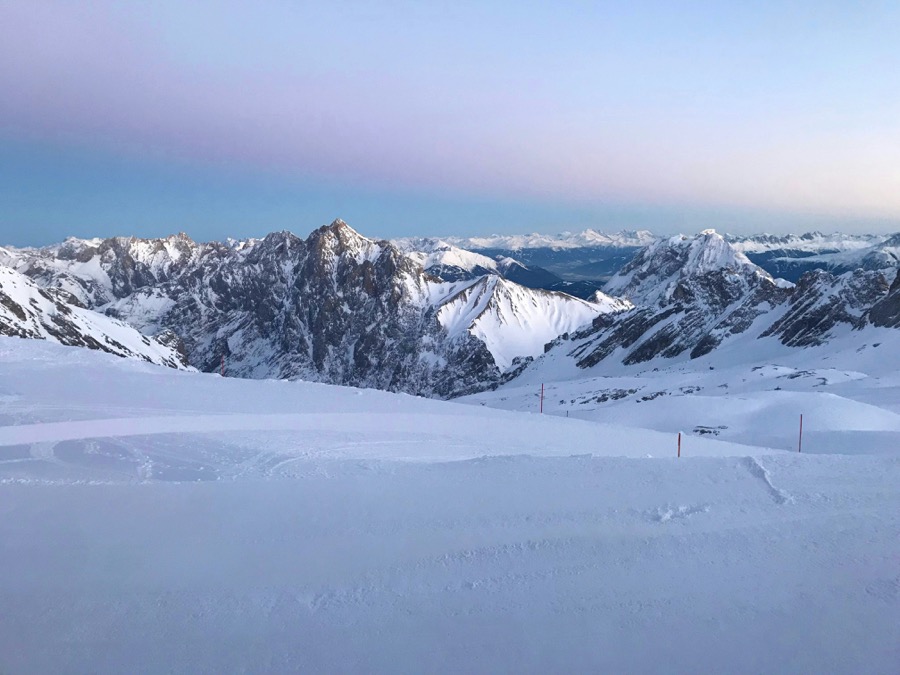
Garmisch-Partenkirchen combines a genuine Bavarian town with two separate ski areas rather than one continuous 60km domain. Garmisch-Classic provides 40km across Hausberg, Kreuzeck and Alpspitze, including easy family terrain, strong intermediate pistes and the demanding Kandahar World Cup descent. The Zugspitze adds 20km of high-altitude natural-snow skiing between roughly 2,000m and 2,720m, giving the destination a valuable snow-sure option when valley conditions are weaker. Reaching the Zugspitze requires a separate cog-railway or cable-car journey, so its combined piste total is less seamless than similarly sized linked resorts. Off the mountain, Garmisch-Partenkirchen is a substantial year-round town with restaurants, shops, rail access, historic streets and a huge range of winter activities. It suits families and mixed groups especially well, while stronger skiers will enjoy the Kandahar but may exhaust the lift-served terrain faster than at larger Alpine destinations.

Who is Garmisch-Partenkirchen best for?

ResortRival editorial scores use a 1–10 scale to show how strongly the resort performs for each factor.

Skier ability

Beginner

7.0/10

Very good

Intermediate

8.0/10

Excellent

Advanced

8.0/10

Excellent

Practical fit

Family suitability

8.0/10

Excellent

Garmisch-Partenkirchen provides a strong family week through the Ixis children’s area at Hausberg, beginner lifts, ski schools and a wide choice of town-based activities such as sledging, skating, bowling and bouldering. The main limitations are the more modest beginner terrain, separate Garmisch-Classic and Zugspitze ski areas, and limited dedicated nursery provision.

Resort convenience

6.0/10

Good

Garmisch-Partenkirchen has good local transport but a fragmented ski setup. Garmisch-Classic uses several valley gateways at Hausberg, Kreuzeck and Alpspitze, while the separate Zugspitze ski area requires the cogwheel train or Eibsee route, so visitors using both products should expect transport to be part of the week.

Transfer ease

9.0/10

Exceptional

Resort guide

Snow reliability

7.0/10 · Very good

Garmisch-Partenkirchen has two very different snow profiles. The high Zugspitze ski area is expected to run from 27 November 2026 to 2 May 2027 and offers 20km of naturally snow-sure high-altitude pistes, while Garmisch-Classic’s 40km lower mountain is expected from mid-December to 29 March 2027. That makes the destination reliable overall, but early- and late-season trips depend much more heavily on Zugspitze than on the valley-facing Classic terrain.

Affordability

5.0/10 · Fair

Garmisch-Partenkirchen sits around the mid-range for a major Alpine destination and offers more cost flexibility than many purpose-built high resorts. Its full town has a wide accommodation market, while the guest card gives overnight visitors free local public transport and rail or bus connections make the main mountain access points usable without a car. Eating and drinking can still be expensive by German standards, but self-catering and town services create more budget control than at isolated ski stations.

Après

5.0/10 · Fair

Garmisch-Partenkirchen’s après is sociable but not a core party-resort attraction. Mountain huts and ski bars across Hausberg, Kreuzeck and the Zugspitze provide the natural first stop after skiing, while the large town offers pubs and bars for drinks afterwards. The atmosphere suits visitors who want Bavarian hut culture and a proper evening out without the table-dancing intensity of St Anton or Ischgl.

Other activities

8.0/10 · Excellent

Garmisch-Partenkirchen has exceptional non-ski depth for a ski destination because it is a substantial Alpine town as well as a resort. Official winter material lists more than 110km of winter-hiking routes, snowshoeing, cross-country skiing, ice skating and several sled runs, while ballooning, winter paragliding, bowling and wellness provide further alternatives. Mixed groups can easily fill full rest days without needing to stay around the ski lifts.

Resort amenities

8.0/10 · Excellent

Garmisch-Partenkirchen has some of the strongest practical infrastructure in this part of the Alps. Numerous ski schools and rental shops serve both Garmisch-Classic and Zugspitze, ski depots and lockers are available around Hausberg, and buses and trains connect the town with the mountain bases. As a year-round health resort it also has extensive medical, wellness, shopping and everyday town services. The trade-off is that the resort is spread across a real town rather than one compact ski-in/ski-out base.

Off-piste

6.0/10 · Good

Garmisch-Partenkirchen is a strong ski-touring base, but its current off-piste description should distinguish touring from easy lift-served freeride. Official tourism promotes numerous tours for levels from beginners to extreme athletes, with powder descents across the Werdenfels mountains and explicit avalanche-condition guidance. The terrain can be serious and route-finding matters, so appropriate equipment, current avalanche information and professional guidance are important away from prepared pistes.

Nightlife

Garmisch-Partenkirchen has a genuine town evening scene, but nightlife is broader and less ski-club focused than the old Peaches-led description suggests. Current tourism material supports bars, live-music venues and a substantial going-out culture across Garmisch and Partenkirchen, without requiring one dedicated nightclub as the resort’s identity. Visitors have plenty of evening choice, but this is not a party-first destination.

Restaurants & bars

Garmisch-Partenkirchen has unusually strong dining depth because it is a real Bavarian town rather than a self-contained ski station. Current tourism highlights traditional mountain huts and Bavarian food alongside contemporary restaurants such as 4Eck and the newly relocated Speisemeisterei. The range comfortably supports a week of varied eating; the legacy “60+” estimate is better dropped unless a current restaurant-only total is published.

Average age

34

Garmisch-Partenkirchen has a broad, slightly mature visitor mix. Families use the learning areas and town services, couples and sightseeing visitors value the Bavarian town atmosphere, while experienced skiers and ski tourers add a more serious sporting segment. It feels more mixed and adult than youth-led party resorts, except during major event weekends.

Crowds & peak periods

Garmisch-Partenkirchen is busiest around Christmas/New Year, February holiday weeks and major sporting events. The New Year ski jumping event is fixed for 1 January 2027 and the Kandahar hosts Alpine Ski World Cup activity in the January/February period, creating additional demand beyond normal school holidays. January outside event dates and March outside busy weekends usually give a better balance, while the split between Zugspitze and Garmisch-Classic helps disperse day skiers.

What makes this resort different?

What makes it different

Holiday skiers can tackle a 92% World Cup pitch

The Kandahar is not reserved permanently for racers. When open, experienced public skiers can take on the famous black descent, including a 'Freier Fall' section reaching a 92% gradient.

Worth knowing

New Year's Day brings 25,000 ski-jumping fans

Every 1 January, Garmisch hosts the second event of the Four Hills Tournament in its Olympic Ski Stadium. The atmosphere is extraordinary, but the town and transport are nothing like a normal quiet ski day.

Getting there

9.0/10transfer easeExceptional

Garmisch-Partenkirchen has excellent access from both Munich and Innsbruck. Munich Airport is roughly 90–100 minutes away by road and the resort has its own railway station with frequent connections, giving visitors strong alternatives to private transfer despite usually needing a rail change.

Main airport
Munich Airport
Typical transfer
Munich Airport is a major European hub; current private-transfer operators typically schedule about 90–100 minutes to Garmisch-Partenkirchen. Innsbruck Airport is much closer geographically, around 50–55 km / roughly 45–50 minutes by road.
Public transport
Excellent: Garmisch-Partenkirchen has its own central railway station. Current Munich Airport rail journeys are typically about 2h–2h25 with one change, with around 23 services per day on the airport-to-resort route.
Other airports
Innsbruck is an excellent close regional alternative, while Munich provides far greater year-round international flight breadth.
Transfer options & cost
Strong private market from both Munich and Innsbruck; Munich-based ski-transfer/chauffeur companies provide direct airport-to-accommodation service, while rail offers a low-cost and frequent alternative.
Final mile
No special resort-entry restriction. Both road transfers and rail arrive directly in town, keeping final-mile friction low.

Frequently asked questions

Is Garmisch-Partenkirchen one connected ski area?

No. The destination has two separate ski areas: Garmisch-Classic has 40km of pistes around Hausberg, Kreuzeck and Alpspitze, while the Zugspitze high-mountain area adds about 20km. They are part of the same destination but are not joined by ski lifts or pistes, so switching mountains means returning to transport. ResortRival therefore treats the largest linked ski area as 40km rather than implying a seamless 60km network.

Can you ski on the Zugspitze, Germany's highest mountain?

Yes. The Zugspitze has a separate high-altitude ski area with about 20km of pistes and the strongest natural snow reliability in the destination. For 2026/27 its season is expected from 27 November to 2 May, while lower Garmisch-Classic is planned from mid-December to 29 March. That makes Zugspitze particularly valuable for early- and late-season trips.

Can normal skiers ski the Kandahar World Cup run in Garmisch?

Yes, when it is open and you are genuinely experienced. The public black Kandahar includes around 920m of vertical and sections reaching a 92% gradient, with the operator describing it as suitable for seasoned and courageous hobby skiers. Race preparation can close all or part of the course for weeks around World Cup events, so anyone specifically travelling to ski it should check live restrictions.

What happens in Garmisch-Partenkirchen on New Year's Day?

Garmisch hosts the traditional New Year's Ski Jumping event on 1 January as the second stop of the Four Hills Tournament. The Olympic Ski Stadium holds around 25,000 spectators and the event is one of the town's defining winter traditions. If you want the spectacle, New Year is exceptional; if you want a quiet ski trip, expect much heavier demand and event traffic.

Did Garmisch-Partenkirchen host the Winter Olympics?

Yes. Garmisch-Partenkirchen hosted the 1936 Winter Olympics, and Olympic heritage is still visible in the ski stadium, historic bobsleigh site and other sporting venues. The Kandahar and modern World Cup programme continue the competitive-skiing tradition. The town is therefore much more than a ski base: major winter sport has been part of its identity for generations.

Scroll to Top