Slopes & terrain
77 km Schmittenhöhe · 408 km regional pass
- Classified pistes
- 77.0 km
- Local terrain
- 77.0 km
- Directly linked terrain
- 77.0 km
- Regional pass terrain
- 408.0 km
- Connectivity
- Primary local area + regional pass
Salzburg, Austria
Schmittenhöhe / Skicircus
77 km Schmittenhöhe · 408 km regional pass
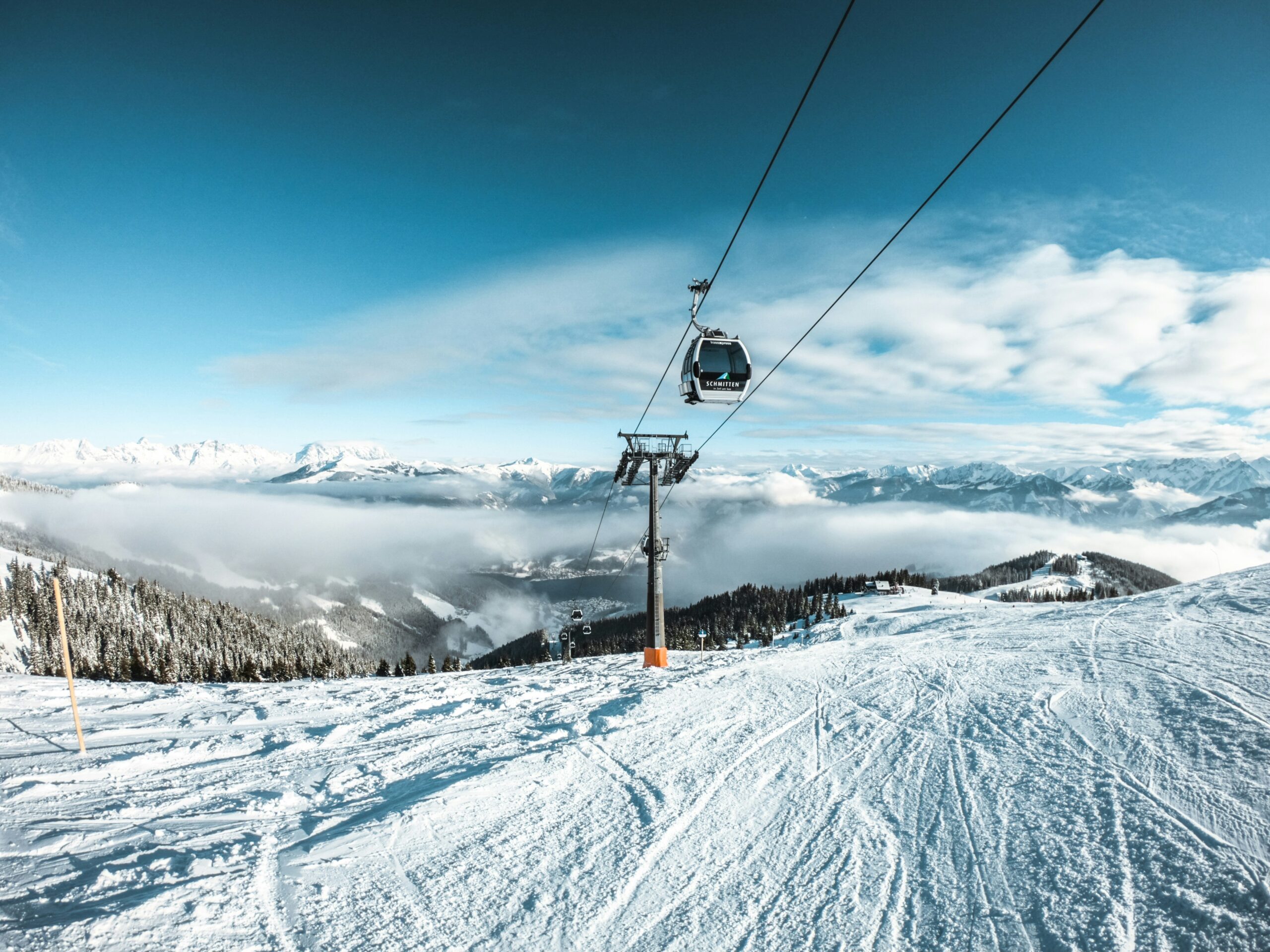
Zell am See combines a historic lakeside town with the 77km Schmittenhöhe ski area immediately above it. Six feeder lifts and multiple valley runs give unusually good access from town and Schüttdorf, while wide family pistes, strong intermediate cruising and demanding blacks such as the Trass make the local mountain more varied than its size suggests. The Ski ALPIN CARD expands the offer to 408km across Schmittenhöhe, the Kitzsteinhorn and Skicircus Saalbach Hinterglemm Leogang Fieberbrunn. That figure is a regional pass total rather than one continuous ski domain: Kaprun requires bus or rail connections, while Saalbach is reached via the zellamseeXpress/Viehhofen link and onward transport. Zell’s biggest strengths are its attractive old town, Lake Zell setting, rail access and excellent non-ski amenities. Lower local altitude means snowmaking matters more than at glacier resorts, but Kitzsteinhorn provides a high-altitude fallback.

Excellent
Excellent
Excellent
Excellent
Zell am See combines a family-focused local mountain with excellent town-based alternatives. Schmidolin’s Kinder-Skiland, magic carpets, children’s ski programmes and fun areas support progression, while the indoor pool, water slide and ice rink are valuable on bad-weather days; families using the wider Ski ALPIN CARD area should expect more transport between sectors.
Excellent
Zell am See has a particularly convenient town-centre gateway through cityXpress, which reaches the Schmittenhöhe quickly from the visitor core. AreitXpress and the Schmittenhöhe/trassXpress bases provide additional access, supported by free ski buses, so accommodation location determines whether the ski day begins on foot or with a short transfer.
Exceptional
Zell am See’s local Schmittenhöhe is less naturally snow-sure than nearby glacier terrain, but its prepared pistes have strong technical backup. Schmitten uses more than 500 snow cannons supported by 12 pumping stations and three reservoirs, while the 2026/27 Ski ALPIN CARD winter season structure begins in late November. When lower slopes are affected by warmth, the Kitzsteinhorn offers a regional fallback with planned skiing from 10 October 2026 into May 2027.
Zell am See sits around the mid-range for a major Austrian destination, with a wider mix of hotels and apartments than many ski-only villages. A proper town centre and included ski-bus links between Zell am See, Kaprun and the main lift bases make car-free stays practical and give visitors more ways to control daily spending. Peak holiday lodging can still be expensive, so the strength is flexibility rather than uniformly low prices.
Zell am See has a lively town-based après scene. Villa Crazy Daisy is a current focal point, with a three-storey food, drinks and music format and live bands every day in winter from 23 December, while slope-side huts around Schmitten add earlier post-ski stops. The atmosphere is social and accessible rather than as concentrated as a dedicated Austrian party resort.
Zell am See-Kaprun has exceptional non-ski variety. The region offers extensive cross-country skiing, winter and snowshoe hiking, ice skating, tobogganing, horse-drawn sleighs and ski touring, while the lakeside town and nearby wellness facilities add indoor leisure. This is one of the stronger Austrian choices for mixed groups spending full days away from alpine skiing.
Zell am See has deep practical infrastructure because it is a real town as well as a ski base. Current official directories list multiple ski schools, 22 ski-rental options across Zell and Kaprun, lift-base ski depots and frequent ski-bus links between the main sectors. Several separate Schmitten feeder lifts serve Zell, Schüttdorf and Viehhofen, so visitors have good logistical choice even though accommodation location matters.
Zell am See itself is more piste-led than its current 7/10 description suggests; the strongest regional freeride is on the nearby Kitzsteinhorn rather than the Schmittenhöhe. Kitzsteinhorn has five designated freeride routes plus a Freeride Info Base with avalanche, snow and equipment information and a transceiver checkpoint. So Zell works well as a freeride base only if visitors are prepared to use the wider Ski ALPIN CARD network.
Zell am See has a genuine evening bar scene, but current evidence is stronger for live music and pubs than for a large club circuit. Villa Crazy Daisy runs daily winter live bands, while Ginhouse remains a current specialist cocktail and pub venue in the centre. The older Off Piste Bar claim should only be carried forward if it is freshly verified; the safest positioning is lively town nightlife rather than club-first partying.
Zell am See has broad town-scale dining, spanning traditional Austrian inns, modern restaurants, cafés and bars. Steinerwirt is current for winter 2026/27 and combines more than 500 years of history with contemporary Austrian cooking, while the wider destination provides substantial local and regional choice. The legacy ‘60+ restaurants’ total should be dropped unless a Zell-only current count is confirmed.
Zell am See attracts a broad, fairly mature mix of families, couples, ski groups and international visitors. Family-friendly Schmitten terrain and town services pull in parents, while the lively centre and wider Ski ALPIN CARD keep adult groups engaged. It feels balanced and sociable rather than either youth-led or luxury-dominated.
Zell am See is busiest around Christmas/New Year and February school holidays, when the cityXpress, Schmittenhöhebahn and areitXpress access points see the most pressure. The mountain’s 27 lifts and multiple feeder stations help distribute skiers, and the wider Ski ALPIN CARD provides alternatives in Kaprun and Saalbach. January and March outside holiday weeks generally offer a better balance of snow, atmosphere and space.
Schmittenhöhe rises directly over Lake Zell, with panoramic views across the water and more than 30 surrounding 3,000m peaks. The combination of a genuine lakeside town and lift-served skiing gives Zell am See a visual identity very few major ski resorts share.
The Ski ALPIN CARD also covers the Kitzsteinhorn and the Saalbach-Hinterglemm-Leogang-Fieberbrunn Skicircus. They are excellent extra options, including glacier skiing from October into May, but they remain separate ski regions reached via transport rather than one seamless piste network from Zell.
9.0/10transfer ease·Exceptional
Zell am See has excellent transport connections, with Salzburg Airport relatively close, direct bus options and a railway station in the town centre. International rail services and a deep private-transfer market make it particularly easy to arrive without a car.
Zell am See’s local Schmittenhöhe has about 77km of pistes. The Ski ALPIN CARD covers 408km by also including the Kitzsteinhorn/Maiskogel area at Kaprun and the 270km Skicircus Saalbach Hinterglemm Leogang Fieberbrunn, but those are separate ski regions rather than one continuous 408km mountain. ResortRival therefore uses 77km as Zell’s direct local comparison and 408km only as regional-pass context.
Not as one seamless lift-and-piste journey. Zell’s Schmittenhöhe, the Kitzsteinhorn/Maiskogel and the Skicircus all sit on the same Ski ALPIN CARD, but moving between the regions involves local transport and separate access points. That flexibility is valuable for a week-long trip, especially when conditions differ, but it should not be confused with a single linked mega-domain.
Yes. Schmittenhöhe is particularly good for intermediates who enjoy scenic blue and red cruising, while beginners have family-focused terrain and multiple ski schools. Stronger skiers get steeper pistes including the Trass, which the destination describes as reaching up to a 70% gradient. The wider regional pass then adds substantially more terrain for groups that want variety across several days.
The local Schmittenhöhe depends more on grooming and extensive snowmaking than high-glacier resorts, so lower runs are more exposed in warm weather. The advantage is regional flexibility: nearby Kitzsteinhorn is scheduled to ski from 10 October 2026 into May 2027, weather permitting. That does not make Zell itself a glacier resort, but it gives visitors a powerful high-altitude fallback on the same regional pass.
The mountain rises directly above a real lakeside town, so many pistes look across Lake Zell toward more than 30 surrounding 3,000m peaks. That combination of skiing, town life and lake scenery is unusual in Austria. It also means non-skiers have a genuine destination below the lifts rather than spending the week in a purpose-built ski station.
We use cookies to improve your experience and help keep ResortRival running smoothly.
You can accept all cookies or manage your preferences at any time.